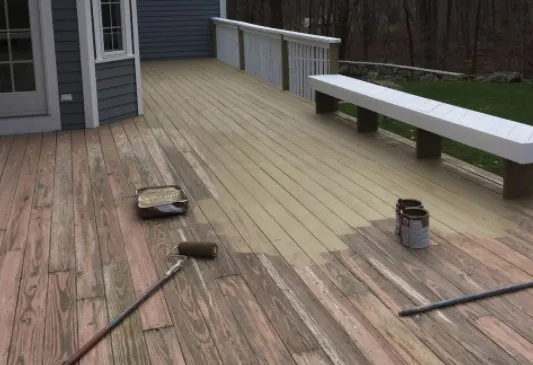
Most interior rooms take us 1 to 2 days, and a full exterior usually takes 3 to 5 days depending on the weather. Drying is quick in our dry air. Curing, which is the paint reaching full hardness, takes weeks.
Figures marked as national on this page were published by HomeGuide for 2026. They are not our promises for your job.
How long does it take to paint a house inside?
Most rooms take 1 to 2 days, including prep and two coats. A whole house interior commonly takes a crew several days to two weeks, depending on size, repairs and how much trim and ceiling is included.
HomeGuide's national figures for painting time alone are 4 to 5 hours for a bedroom, 5 to 7 for a living room and 2 to 3 for a bathroom, with 1 to 2 more for trim and baseboards. Prep, repairs and drying between coats come on top.
How long does it take to paint the exterior?
A full exterior usually takes 3 to 5 days here, depending on the house and the weather. The national figure is 4 to 5 days for an average job.
Washing comes first and needs drying time. Scraping and priming a peeling house can take as long as the painting. Spring storms and summer afternoon wind can each cost a day.
How long should I wait between coats?
Follow the recoat time on the can. For most interior latex paints that is a few hours, and longer for oil-based and enamel paints.
In Salt Lake's dry air paint feels dry very quickly, but dry to the touch is not the same as ready for another coat. Recoating too soon can pull the first coat or trap moisture.
How long before furniture can go back?
You can put furniture back in the room once the paint is dry to the touch, usually the same evening or the next day. Keep it an inch or two off the walls for a few weeks.
Wait longer before leaning anything against a wall, hanging pictures or putting things on painted shelves and sills. Fresh paint under a heavy object sticks to it.
How soon can I shower after the bathroom is painted?
Wait at least 24 hours before you shower in a newly painted bathroom, and longer if you can. Steam on fresh paint can leave streaks and soft spots.
Run the fan and leave the door open for the first week or two of showers.
How long before I can wash or scrub new paint?
Wait about a month before scrubbing. Paint takes roughly two to four weeks to cure fully, depending on the product. Until then it marks and burnishes easily.
If you must clean a spot sooner, use a soft damp cloth and no cleaner. Cabinets and doors with enamel need the same patience.
Can I stay in the house while it is painted?
Yes. Most people stay in the home during interior painting. We work room by room so you always have somewhere to be, and we cover floors and furniture.
People sensitive to paint smell, babies and pets do better in a different part of the house with a window open. Winter inversions sometimes mean poor outdoor air here, so we air rooms in short spells. Exterior work does not keep you out, though windows stay shut while we spray.
How long does interior paint last?
There is no single published figure for how long interior paint lasts. It depends on the room and how it is used.
As a general rule, ceilings and adult bedrooms go longest. Halls, kitchens, bathrooms and children's rooms are repainted soonest. HomeGuide's general figure for repainting is every 5 to 10 years.
How long does exterior paint last?
Exterior paint lasts 5 to 10 years on average by the national figures, with a full range of 3 to 20 years.
| Surface | Published lifespan |
|---|---|
| Wood siding | 3 to 7 years |
| Stucco | 5 to 7 years |
| Aluminum siding | 5 to 10 years |
| Vinyl siding | 5 to 10 years |
| Fiber cement | 10 to 15 years |
| Brick, acrylic paint | 3 to 5 years |
Sun is what shortens it here. The south and west sides of a house at this altitude wear much faster than the north side.
How often should I repaint the outside of the house?
Repaint when the paint starts to fail, not on a fixed date. For most houses that works out to somewhere in the 5 to 10 year range in the national figures.
Walk around the house each spring after the snow is gone. Look for chalk on your hand, fading, cracks in caulk and peeling on sills and fascia. Touching up the sunny side and re-caulking can put off a full repaint. Leaving bare wood through another winter makes the next job bigger.